
Oxygen Use on Kilimanjaro: What Trekkers Need to Know
Climbing Mount Kilimanjaro is an extraordinary adventure, but high altitude presents challenges for every climber. At 5,895 meters (19,341 feet), the summit exposes trekkers to reduced oxygen levels, which can lead to Altitude Sickness (AMS), fatigue, and other health complications. Understanding oxygen use on Kilimanjaro is essential for safety and peace of mind during your climb.
Why Oxygen May Be Needed
Most climbers do not require supplemental oxygen to reach Kilimanjaro’s summit. Proper acclimatization, pacing, hydration, and guided support allow the body to adjust naturally to high altitude.
However, oxygen may become necessary in certain situations:
- Severe Altitude Sickness: For symptoms of AMS, HAPE (High Altitude Pulmonary Edema), or HACE (High Altitude Cerebral Edema)
- Extreme Fatigue or Exhaustion: When climbers struggle to maintain pace at high elevation
- Medical Conditions: Some climbers with respiratory or heart conditions may require supplemental oxygen
Using oxygen is primarily a safety measure, not a performance enhancer.
How Oxygen is Administered
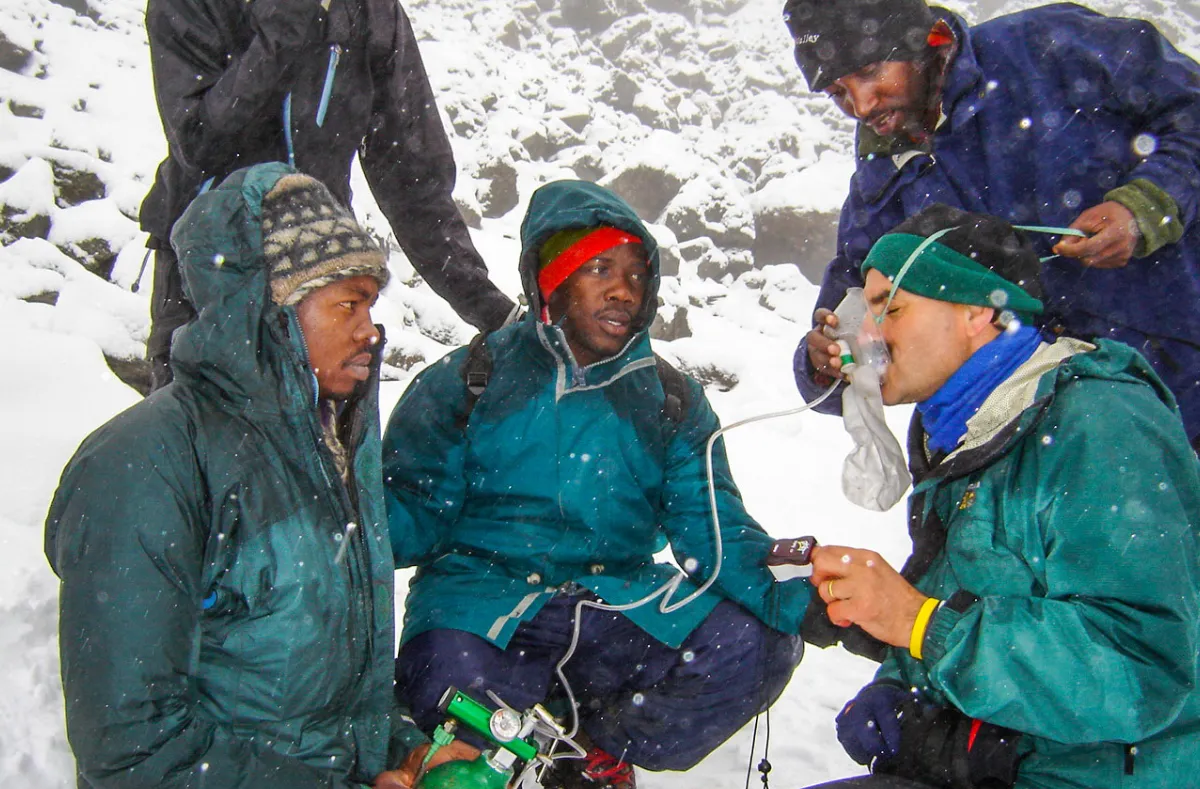
On Kilimanjaro, oxygen is administered through:
- Nasal Cannula: A small tube placed under the nose for light to moderate supplemental oxygen
- Face Mask: For more severe cases, a mask delivers higher concentrations of oxygen
- Portable Oxygen Tanks: Guides carry tanks on popular routes, particularly on the Machame, Lemosho, and Rongai trails
Oxygen is typically used in combination with rest, descent, and medical monitoring to stabilize climbers.
Signs You Might Need Supplemental Oxygen
Climbers may require oxygen if they experience:
- Shortness of breath at rest
- Severe headache, nausea, or vomiting
- Confusion or difficulty walking
- Coughing with frothy or pink sputum (possible HAPE)
- Extreme fatigue preventing continued ascent
If these symptoms occur, guides from Tanzania Hiking provide immediate support and administer oxygen as part of rescue protocols.
Prevention is Better Than Oxygen
While oxygen can save lives, it should not be relied upon as a substitute for proper preparation. Preventive measures include:
- Gradual Ascent: Choose routes that allow 6–8 days for proper acclimatization
- Hydration: Drink 3–4 liters of water daily
- Pacing: Follow the “pole pole” (slowly, slowly) approach
- Rest and Nutrition: Get sufficient sleep and eat high-carbohydrate meals
- Monitoring Symptoms: Early recognition of altitude sickness allows intervention before oxygen is needed
Why Guided Climbs Are Safer
Professional guides, like those at Tanzania Hiking, are trained to:
- Monitor climbers’ oxygen saturation levels
- Administer supplemental oxygen when required
- Adjust itineraries to allow acclimatization
- Coordinate evacuation if conditions worsen
Having experienced guides ensures oxygen is used effectively and only when necessary.
Book Your Kilimanjaro Climb with Tanzania Hiking
At Tanzania Hiking, we prioritize climber safety. Our guided climbs include trained staff and emergency oxygen equipment for high-altitude support, ensuring peace of mind throughout your ascent.
For bookings and inquiries, contact
- info@tanzaniahiking.com
- WhatsApp +255 752213715 / +255 754557877.
Request a Quote for Your Kilimanjaro Adventure
Below this page, you’ll find a request-a-quote form. Share your preferred travel dates, route, and group size, and our team will provide a customized itinerary and detailed pricing.