
Mount Meru, Tanzania’s second-highest peak at 4,566 meters, is a striking destination for hikers, nature lovers, and wildlife enthusiasts. Located within Arusha National Park, the mountain supports a remarkably diverse ecosystem that transitions from tropical forests to alpine moorlands, volcanic craters, and unique high-altitude flora. Understanding what makes Mount Meru’s ecosystem unique enhances your trekking experience and highlights why this mountain is a natural treasure.
Diverse Elevation Zones and Habitats
One of the most distinctive features of Mount Meru is its variety of elevation zones, each supporting different plant and animal communities:
- Lower Slopes (1,500–2,500 meters) – Montane Forests
- Dense hardwood forests with camphor, fig, and mahogany trees
- Rich understory of ferns, shrubs, and epiphytes
- Home to monkeys, colobus monkeys, and abundant birdlife
- Mid Slopes (2,500–3,500 meters) – Transitional Forest and Moorlands
- Mix of montane forest and alpine shrubs
- Giant lobelias, proteas, and heather species
- Key acclimatization zone for trekkers
- Upper Slopes (3,500–4,566 meters) – Alpine Zone and Volcanic Terrain
- Sparse vegetation including Helichrysum and alpine grasses
- Rocky ridges and volcanic ash fields
- Unique high-altitude plants adapted to cold, wind, and UV exposure
This vertical zonation creates microclimates and ecological niches, allowing diverse species to thrive in close proximity.
Wildlife Diversity
Mount Meru’s ecosystem supports a wide array of wildlife, including:
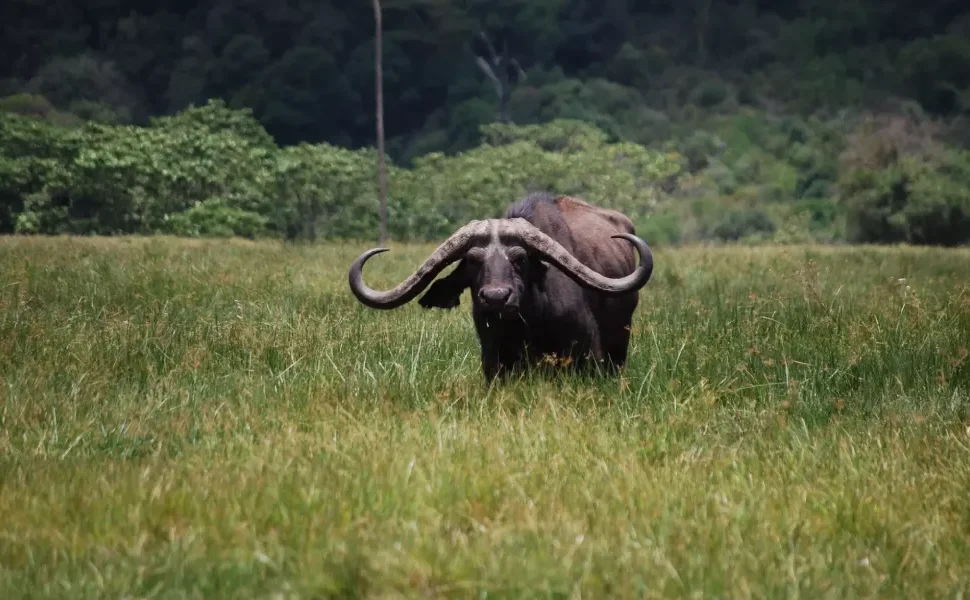
- Large mammals: giraffes, buffaloes, warthogs, and antelopes on the lower slopes
- Primates: colobus and blue monkeys in forested areas
- Predators: leopards and smaller cats, rarely seen but present
- Birdlife: over 300 recorded species, including hornbills, turacos, sunbirds, and raptors
The combination of forest, grassland, and alpine habitats enables high biodiversity within a relatively compact area.
Volcanic and Geological Features
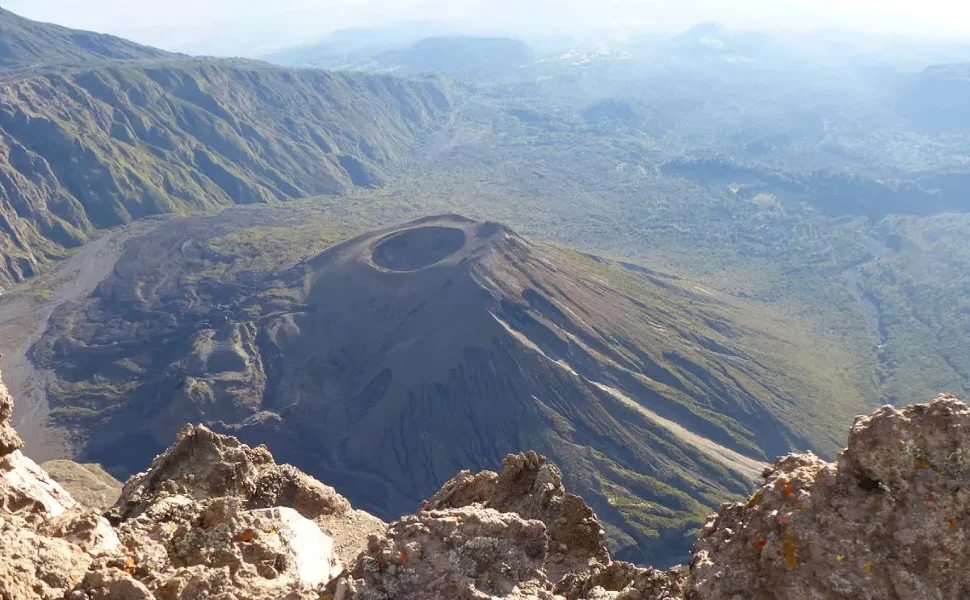
Mount Meru is an active stratovolcano, and its geology contributes to the uniqueness of its ecosystem:
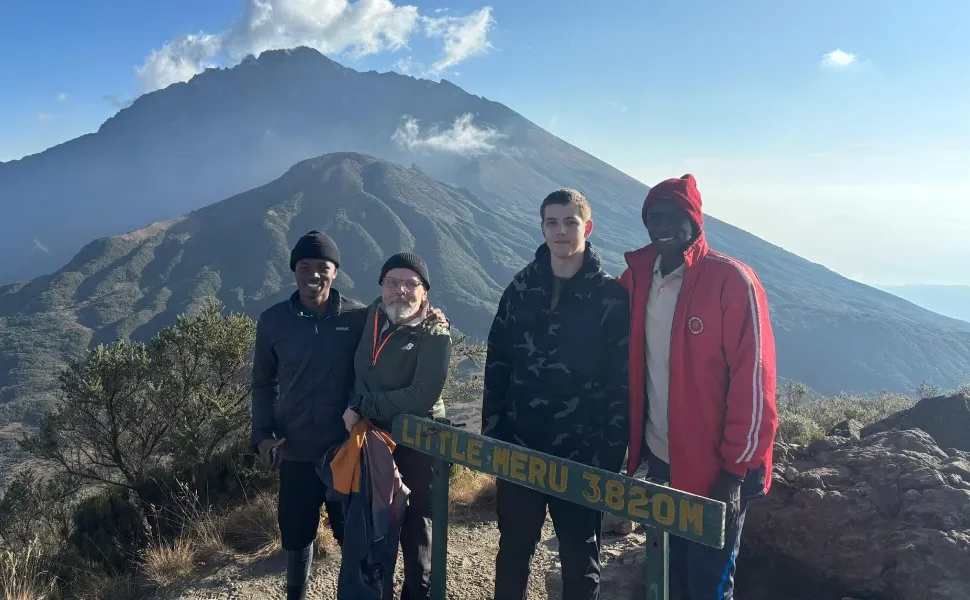
- Crater landscapes: The Meru Crater and Little Meru provide dramatic ridges and valleys
- Volcanic soil: Nutrient-rich soils support lush forest growth at lower elevations
- Ash fields and lava formations: Host specialized alpine vegetation
These geological features interact with elevation and rainfall patterns to shape Mount Meru’s distinct ecological zones.
Rare and Endemic Flora
The mountain is home to several plants unique to East African highlands:
- Giant lobelias and groundsel rosettes
- Helichrysum clusters on alpine ridges
- Protea shrubs and orchids in forested pockets
These plants are adapted to extreme conditions, including cold nights, intense sun, and high winds, making them a highlight for both botanists and trekkers.
Water Systems and Microclimates
Mount Meru’s slopes are crisscrossed by streams, waterfalls, and small rivers, which support:
- Aquatic species and amphibians
- Forest undergrowth and epiphytes
- Bird species that rely on water sources
The mountain’s rainfall patterns create microclimates that sustain life across different elevations, from humid lower forests to drier alpine zones.
Why Mount Meru’s Ecosystem Matters
- Supports high biodiversity in a compact area
- Provides crucial acclimatization zones for trekkers
- Offers unique photographic and wildlife observation opportunities
- Acts as a natural laboratory for studying ecological adaptation
For adventurers, understanding Mount Meru’s ecosystem enhances safety, enjoyment, and appreciation of the mountain’s natural beauty.
Plan Your Eco-Friendly Trek With Tanzania Hiking
Tanzania Hiking offers guided Mount Meru treks that highlight the mountain’s unique ecosystems. Our guides explain flora, fauna, and geological features while ensuring safe and responsible trekking practices.
- Email: info@tanzaniahiking.com
- WhatsApp: +255 752 213 715 / +255 754 557 877
Request a Quote for Your Mount Meru Trek
Want to explore Mount Meru’s unique ecosystem firsthand?
Fill out the quote request form below, and our team will create a custom trekking itinerary that balances adventure, wildlife observation, and ecological exploration.