

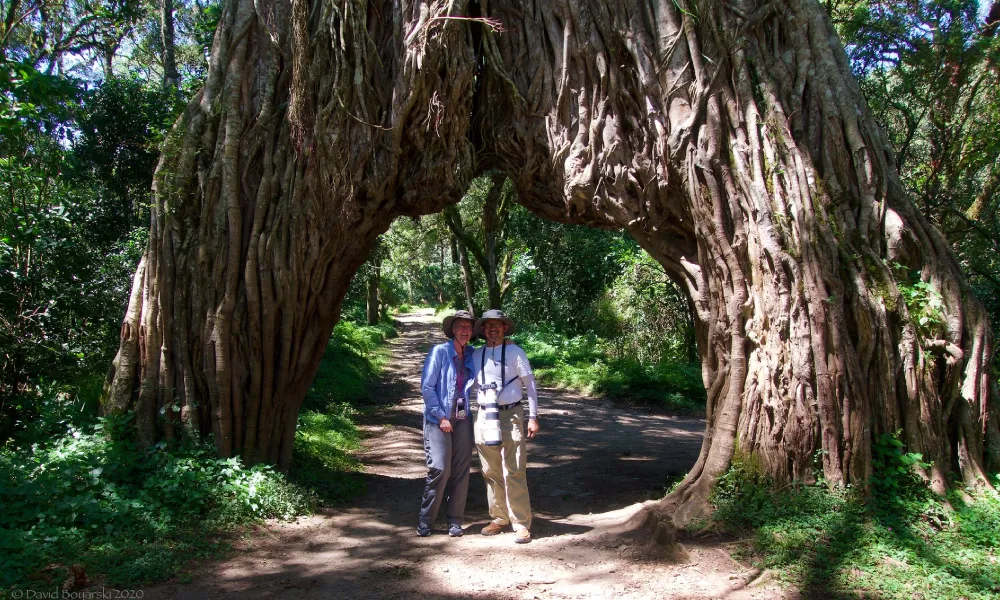
Mount Meru, Tanzania’s second-highest peak at 4,566 meters, is famous for its trekking routes, stunning vistas, and diverse ecosystems. But beyond the summit and panoramic views, the mountain hides natural landmarks that enrich the hiking experience. Among these, the Fig Tree Arch is a must-see, alongside other unique geological and botanical features that make Mount Meru special.
This guide explores the Fig Tree Arch and other natural landmarks, providing insight for trekkers and nature enthusiasts.
The Fig Tree Arch: A Trekker’s Favorite
Location and Formation
The Fig Tree Arch is located along the lower slopes near the start of the Momella Route. This natural arch is formed by intertwining fig trees, creating a tunnel-like structure over the trail. Over decades, the trees grow together, forming a striking archway that frames the forest path.
Why It’s Special
The Fig Tree Arch is more than just a visual spectacle:
- It offers a natural photo frame for trekkers
- Serves as a peaceful resting spot before the first major climb
- Demonstrates the resilience and adaptability of tropical forest species
Trekking through the arch feels like entering a hidden world, where the sounds of birds and rustling leaves enhance the sense of adventure.
Other Notable Natural Landmarks
Waterfalls and Streams
Mount Meru’s lower and mid-slopes host several small waterfalls and streams, often overlooked by casual trekkers:
- Forest streams near Miriakamba Hut provide freshwater and refreshment spots
- Seasonal waterfalls appear during the rainy season, offering spectacular photography opportunities
These water features are not only scenic but also support forest flora and wildlife, attracting birds and primates.
Volcanic Ash and Crater Landscapes
Mount Meru is an active stratovolcano, and trekkers encounter striking volcanic landmarks:
- Ash fields along the upper slopes create otherworldly, barren landscapes
- Crater ridges visible from the Saddle offer dramatic views of volcanic terrain
- Little Meru, a secondary volcanic peak, presents unique rock formations and panoramic vistas
These geological features highlight the mountain’s volcanic origins and provide contrast to lush lower forests.
Giant Lobelias and Helichrysum Clusters
At higher elevations, trekkers encounter giant lobelias and Helichrysum clusters, which are natural landmarks in their own right:
- Lobelias, often reaching several meters, form impressive vertical structures
- Helichrysum creates silver-green patches across alpine ridges
These plants are iconic to East African mountains and create breathtaking scenery for trekkers and photographers.
Forest Clearings and Scenic Lookouts
Along the official trekking route, hidden clearings and ridgelines provide natural vantage points:
- Panoramic views over the Arusha plains
- Quiet spots for observing wildlife such as giraffes, buffaloes, and monkeys
- Opportunities for sunrise and sunset photography
Many of these lookouts are not marked on maps, so guides play a crucial role in revealing them safely.
Tips for Exploring Mount Meru’s Natural Landmarks
- Go slow and pause frequently to appreciate hidden features
- Bring binoculars and a camera to capture wildlife and unique formations
- Follow your guide many landmarks are in wildlife zones or sensitive habitats
- Respect nature avoid touching or disturbing fragile plants and tree roots
Book Your Guided Trek With Tanzania Hiking
Tanzania Hiking ensures you experience all of Mount Meru’s natural landmarks, from the Fig Tree Arch to alpine ridges. Our guides know the hidden spots and help you trek safely while maximizing scenic and wildlife encounters.
- Email: info@tanzaniahiking.com
- WhatsApp: +255 752 213 715 / +255 754 557 877
Request a Quote for Your Mount Meru Trek
Want to explore Mount Meru’s hidden natural landmarks?
Fill out the quote request form below, and our team will design a custom trekking itinerary that highlights the Fig Tree Arch, waterfalls, volcanic landscapes, and scenic viewpoints.