
Rongai Route Kilimanjaro Itinerary: Tanzania Hiking Guide
Mount Kilimanjaro, standing tall at 5,895 meters, is Africa’s highest peak and one of the most iconic trekking destinations in the world. With multiple routes leading to the summit, the Rongai Route is unique because it approaches the mountain from the northern side, near the Kenya border. Known for its gentle slopes, dry terrain, and quieter trails, it’s perfect for hikers who prefer a more secluded and serene trekking experience.
This guide provides a detailed Rongai Route Kilimanjaro itinerary, complete with highlights, tips, and recommendations for a successful Tanzania hiking adventure.
Why Choose the Rongai Route?
The Rongai Route is increasingly popular among international hikers and adventure seekers for several reasons:
- Low crowd levels: Unlike Machame or Marangu, Rongai sees fewer trekkers, offering a peaceful journey through nature.
- Gentle, steady ascent: The gradual slope reduces stress on the body, making it suitable for first-time high-altitude hikers.
- Dry weather conditions: The northern approach experiences less rainfall than southern routes, providing clearer views and fewer muddy trails.
- Scenic diversity: From dense forests to alpine desert landscapes, Rongai offers a variety of ecosystems and stunning vistas.
- High summit success rate: Especially for 6–7 day itineraries, the route gives climbers ample time to acclimatize.
Rongai Route Overview
| Feature | Details |
|---|---|
| Duration | 6–7 days |
| Difficulty | Moderate |
| Accommodation | Camping |
| Scenery | Forest, moorland, alpine desert, glaciers |
| Summit Success Rate | High |
| Best Season | January–March, June–October |
Rongai Route Kilimanjaro Itinerary (Typical 6-Day Trek)
Day 1 – Rongai Gate to Simba Camp
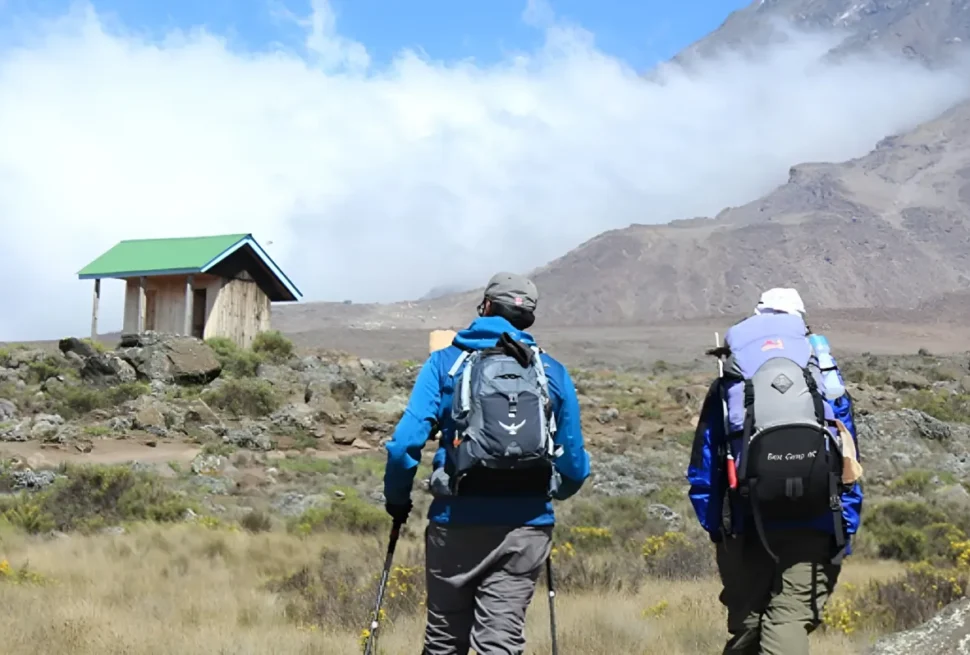
The trek begins at Rongai Gate (1,950 m). You will pass through local farmland and small villages, where you can observe rural Tanzanian life. After entering the lush montane forest, hikers start to feel immersed in nature. Camp is set at Simba Camp, offering a quiet and scenic night under tents, with the sounds of wildlife in the background.
Day 2 – Simba Camp to Second Cave Camp
Hikers ascend through the dense forest and gradually enter the heathland zone, surrounded by giant lobelias and tree heathers. Along the trail, you may spot exotic birds or colobus monkeys. Second Cave Camp is perched on a small plateau, giving panoramic views of the northern slopes. This day is perfect for stretching legs and adjusting to higher altitudes.
Day 3 – Second Cave Camp to Kikelewa Camp
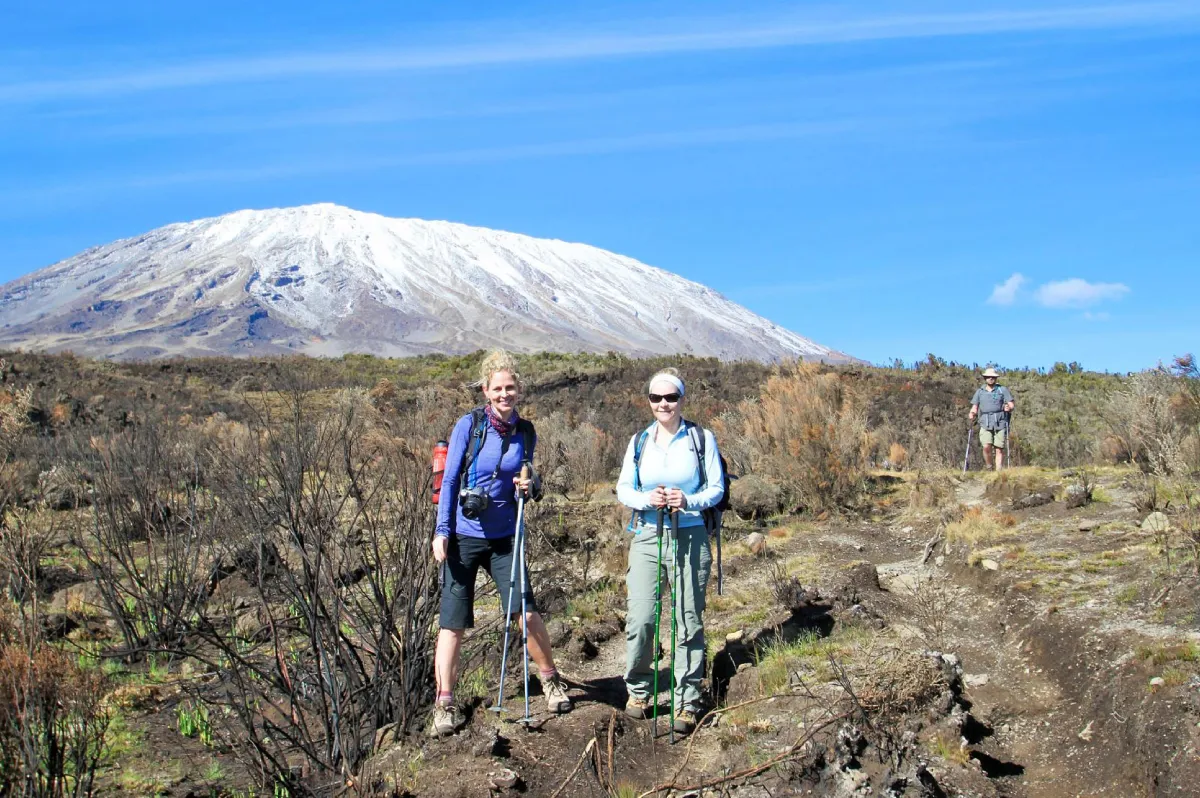
From Second Cave, the trail opens to wide moorland and rocky terrain. Views of Kilimanjaro’s western glaciers and the towering Mawenzi Peak become visible. Hiking is steady, allowing your body to acclimatize gradually. Overnight at Kikelewa Camp, known for its expansive views of the surrounding plains.
Day 4 – Kikelewa Camp to Mawenzi Tarn Camp
The ascent becomes more challenging as you enter alpine desert terrain, with little vegetation and breathtaking volcanic landscapes. The Mawenzi Tarn area offers stunning vistas of Kilimanjaro’s peaks, glaciers, and rugged ridges. This day is shorter, giving trekkers extra time to acclimatize before the summit attempt.
Day 5 – Mawenzi Tarn Camp to Summit (Uhuru Peak) and Descend to Kibo Hut
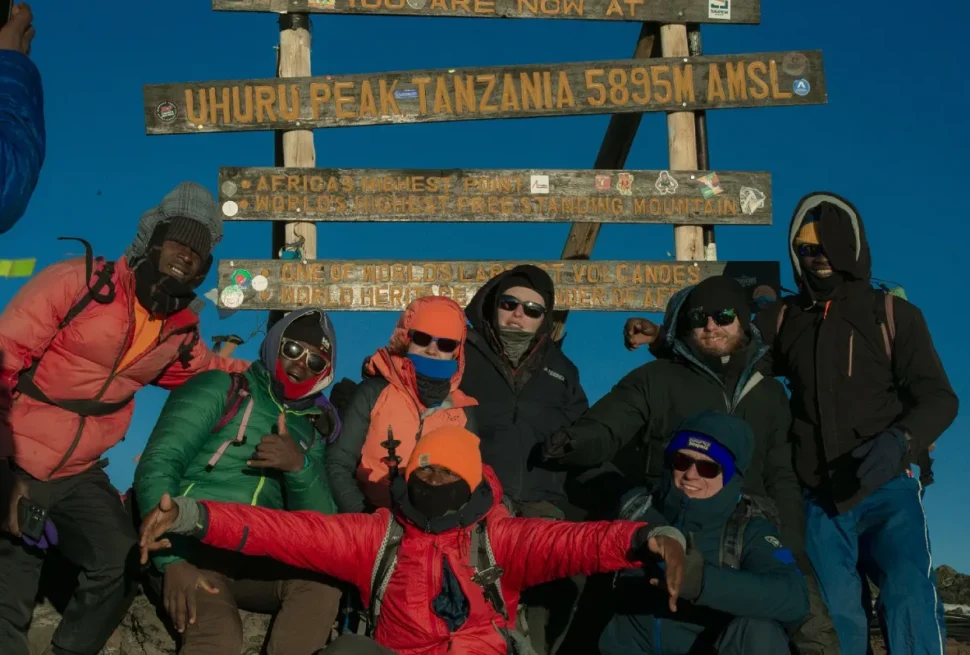
The summit push begins around midnight. Hiking through icy scree and volcanic rock, climbers reach Uhuru Peak (5,895 m) at sunrise, rewarded with incredible panoramic views over the African plains. After celebrating the summit, hikers descend to Kibo Hut to rest and recover.
Day 6 – Kibo Hut to Rongai Gate
The final day is a long but manageable descent through moorland and forest back to Rongai Gate, where your trek concludes. The sense of accomplishment is unmatched, having successfully reached the Roof of Africa.
Rongai Route Highlights
- Northern approach: Unique perspective of Kilimanjaro’s glaciers and Mawenzi Peak
- Gentle slopes: Less physically demanding than southern Machame or Marangu routes
- Secluded campsites: Peaceful nights under the stars with minimal crowds
- Varied ecosystems: Dense forest, alpine desert, volcanic rock formations, and moorland
- Wildlife encounters: Birds, colobus monkeys, and occasional small mammals along the trail
Tips for Hiking the Rongai Route
- Acclimatize properly: Take rest days and maintain a steady pace to reduce altitude sickness risk.
- Pack layered clothing: Temperatures can range from warm lower slopes to freezing summit conditions.
- Hire local guides and porters: They ensure safety, carry equipment, and enhance your trekking experience.
- Stay hydrated: Drink at least 3–4 liters of water daily and snack frequently.
- Bring trekking poles: They help on steep ascents and descents, reducing strain on knees.
- Protect from sun and wind: Sunglasses, sunscreen, and hats are essential in alpine desert zones.
Best Time to Hike the Rongai Route
For the best weather and trekking conditions:
- January–March: Warm temperatures, dry conditions, and fewer trekkers
- June–October: Cooler, dry months with ideal summit visibility
Avoid April–May and November, as heavy rains can make trails slippery and challenging.
Final Thoughts: Rongai Route Kilimanjaro Trek
The Rongai Route is perfect for hikers seeking a quiet, scenic, and less crowded Kilimanjaro experience. Its gentle northern slopes, combined with breathtaking landscapes and high summit success rates, make it ideal for both first-time climbers and experienced trekkers looking for a serene adventure.
With proper preparation, a 6–7 day Rongai Route itinerary allows you to enjoy Tanzania hiking at its best and achieve the unforgettable goal of standing on Uhuru Peak.