
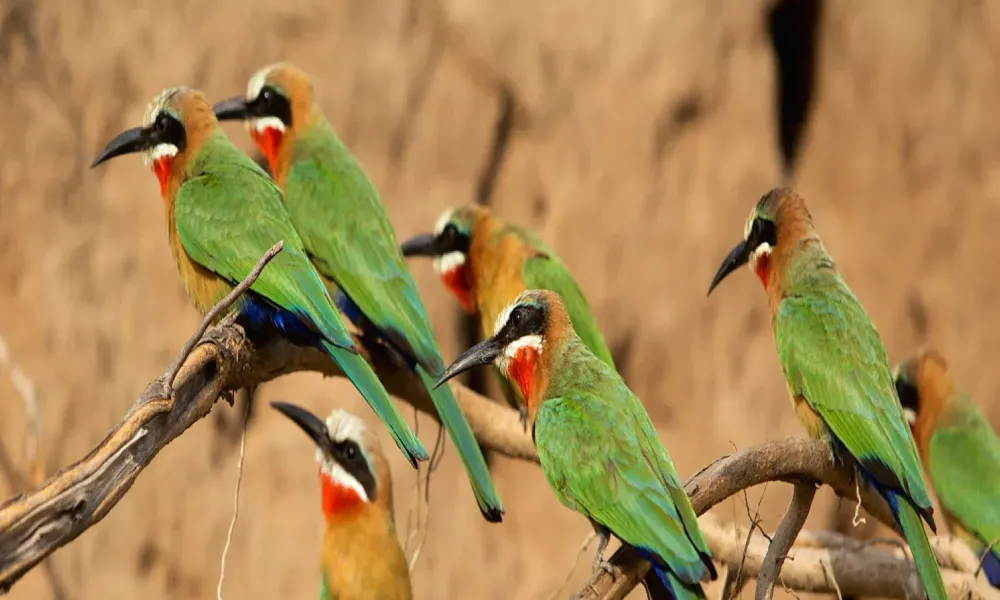
Mount Meru, rising to 4,566 meters in northern Tanzania, is not just a trekking destination it’s also a birdwatcher’s paradise. Located within Arusha National Park, the mountain’s diverse ecological zones host an incredible array of bird species, from forest dwellers to alpine specialists.
Whether you’re a seasoned birder or a trekking enthusiast who loves nature, Mount Meru offers unique birdwatching opportunities along every stage of the climb.
Why Mount Meru Is Ideal for Birdwatching
Mount Meru’s appeal for birdwatchers comes from its varied habitats:
- Lower slopes (1,500–2,500 meters): Grasslands, rivers, and montane forests
- Mid slopes (2,500–3,500 meters): Dense forests, forest clearings, and ridgelines
- Upper slopes (3,500–4,566 meters): Alpine zones and volcanic terrain
Each zone supports different bird communities, making it possible to spot hundreds of species on a single trek.
Top Bird Species on the Lower Slopes
Reticulated Hornbill
- Large, colorful bills
- Found in forest canopies
- Easily spotted near Momella Gate and Miriakamba Hut
Turacos
- Bright green and red plumage
- Agile forest dwellers
- Often heard calling early in the morning
Sunbirds
- Small, vibrant nectar-feeders
- Common near flowering shrubs along the trail
- Provide flashes of color for photography
Mid-Slope Favorites
As you move toward Miriakamba Hut and Saddle Hut, mid-altitude forests and clearings host more elusive species:
African Paradise Flycatcher
- Striking long tail feathers in males
- Prefers forest edges and open canopy gaps
Green Barbet
- Small, greenish bird
- Often seen perched quietly, blending into foliage
Raptors
- Hawks, eagles, and falcons soar above ridges
- Ideal for spotting while resting on short acclimatization walks
Alpine and High-Altitude Birds
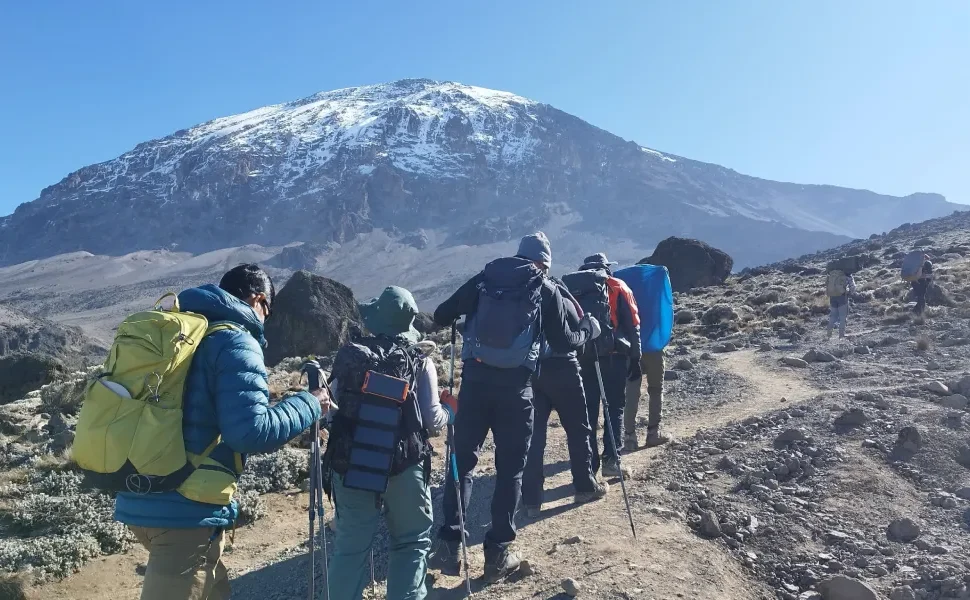
Above 3,500 meters, near Saddle Hut and the summit, the environment changes to alpine moorland and volcanic ridges. Birds here have adapted to colder, harsher conditions:
Rock Hyrax Companions
- While not birds, these small mammals often share the alpine terrain with higher-altitude bird species, such as:
Malachite Sunbird
- Smaller than lowland sunbirds
- Feeds on high-altitude flowering plants
Mountain Chat
- Found near rocky ridges
- Makes short flights along open alpine patches
Though species diversity is lower at altitude, spotting these birds offers a unique and rewarding experience.
Birdwatching Tips for Mount Meru Trekkers
To maximize your sightings:
- Start early: Birds are most active in the morning
- Use binoculars: Essential for spotting canopy dwellers and raptors
- Move quietly: Sudden noise can scare off wildlife
- Follow your guide: Guides know secret feeding areas and lookout points
- Bring a camera: Many species are highly photogenic, especially hornbills and turacos
When to Go Birdwatching on Mount Meru
The dry season (June–October) is ideal for birdwatching because:
- Trails are less muddy
- Forest visibility improves
- Birds congregate near streams and open areas
The short rains (November and May) bring lush greenery and flowering plants, attracting nectar-feeding species such as sunbirds and malachite sunbirds.
Book a Guided Birdwatching Trek With Tanzania Hiking
Tanzania Hiking offers customized Mount Meru treks designed for both hikers and birdwatchers. Our expert guides ensure safe observation while helping you identify the top bird species along the way.
- Email: info@tanzaniahiking.com
- WhatsApp: +255 752 213 715 / +255 754 557 877
Request a Quote for Your Mount Meru Trek
Ready to combine trekking and birdwatching?
Fill out the quote request form below, and our team will design a Mount Meru itinerary that highlights the best birdwatching spots, acclimatization hikes, and scenic viewpoints.