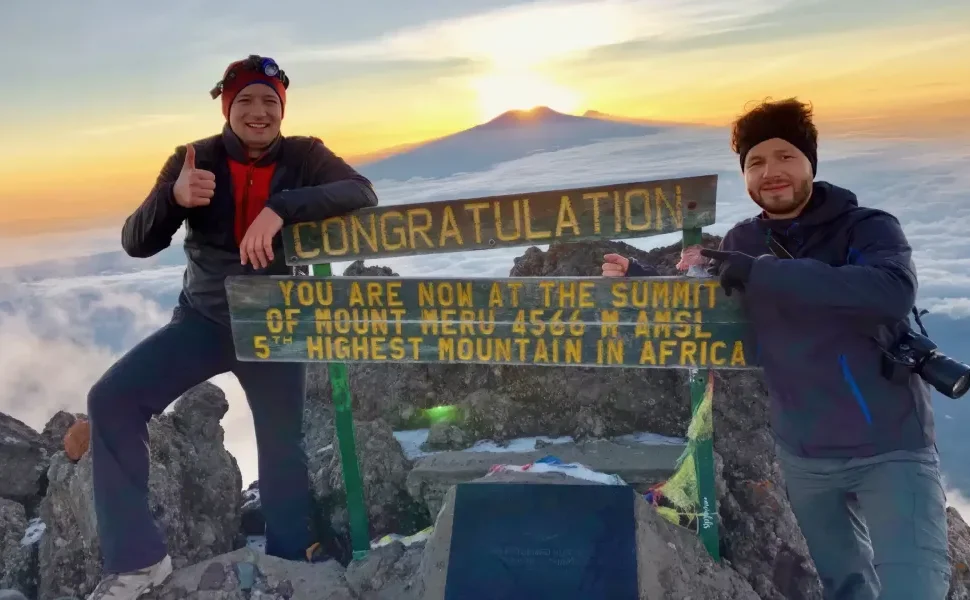

Mount Meru is one of Tanzania’s most scenic and rewarding hikes, rising to 4,566 meters within Arusha National Park. While it is often considered less demanding than Mount Kilimanjaro, Mount Meru still requires serious preparation and strict safety awareness. Wildlife encounters, altitude gain, steep ridges, and changing weather make safety planning essential.
This Mount Meru safety checklist will help you prepare properly and enjoy a secure, successful climb.
1. Book With a Licensed Operator
Mount Meru trekking regulations require:
- A registered mountain guide
- An armed park ranger
Booking with a licensed operator ensures:
- Proper permits and hut reservations
- Trained guides with altitude experience
- Emergency response readiness
Never attempt to arrange the climb informally safety and park compliance depend on professional organization.
2. Choose the Right Itinerar
A 3–4 day itinerary is the safest option for Mount Meru.
- Allows gradual altitude gain
- Improves acclimatization
- Reduces exhaustion and altitude sickness risk
Avoid rushed schedules, especially if this is your first high-altitude hike.
3. Acclimatize Properly
Altitude sickness is one of the biggest risks on Mount Meru.
- Walk slowly (“pole pole”)
- Drink 3–4 liters of water daily
- Eat regular meals
- Sleep at increasing altitudes
- Report symptoms early
Never ignore headaches, nausea, or dizziness. Inform your guide immediately.
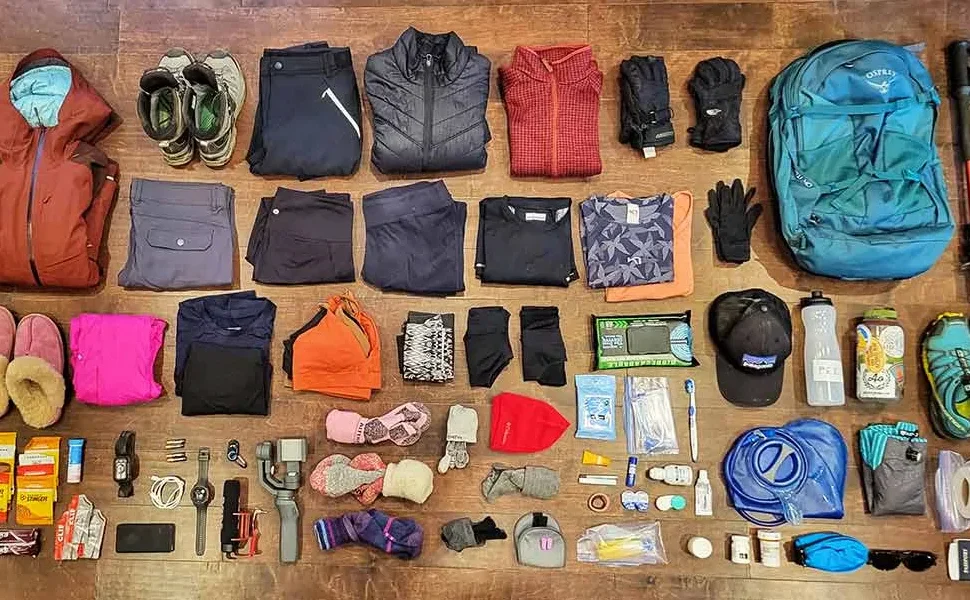
4. Wear Proper Hiking Gear
Your clothing and gear play a major role in safety.
Essential items include:
- Sturdy, broken-in hiking boots
- Warm layers for summit night
- Waterproof jacket and trousers
- Gloves, hat, and thermal wear
- Headlamp with extra batteries
Cold, wind, and rain can arrive suddenly at higher elevations.
5. Stay Hydrated and Nourished
Dehydration increases fatigue and altitude-related issues.
- Carry at least 2–3 liters of water during the day
- Drink small amounts frequently
- Use electrolytes in moderation
- Eat energy-rich meals and snacks
Well-fed and hydrated climbers perform better and recover faster.
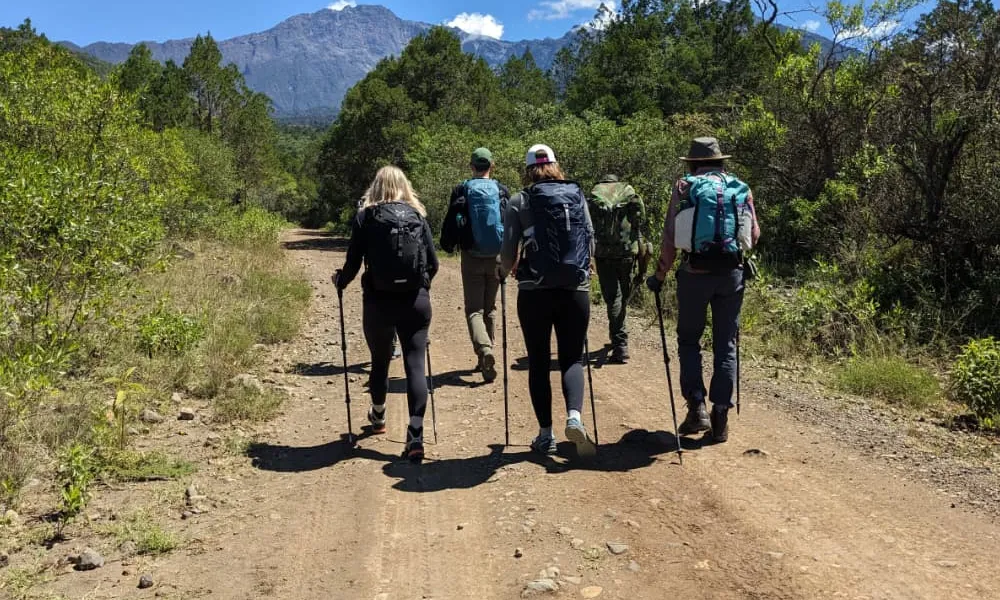
6. Follow Your Guide at All Times
Guides are trained to manage:
- Route navigation
- Wildlife encounters
- Weather changes
- Health monitoring
Never walk ahead of your guide or separate from the group. Staying together is one of the most important safety rules on Mount Meru.
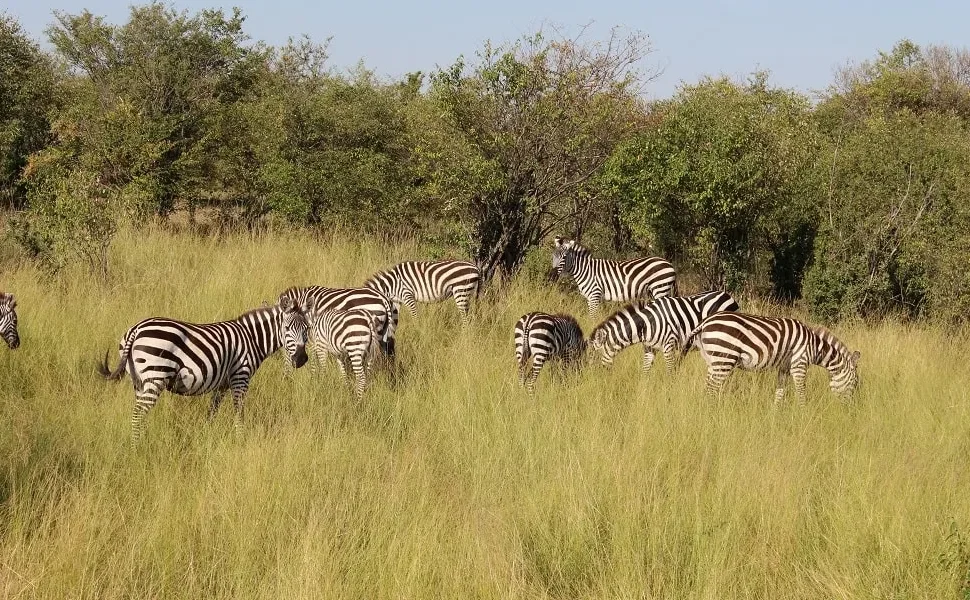
7. Be Aware of Wildlife Zones
The lower slopes of Mount Meru pass through areas with:
- Buffaloes
- Giraffes
- Warthogs
- Monkeys
An armed ranger leads the hike for protection. Follow all ranger instructions and avoid sudden movements or loud behavior.
8. Prepare for Summit Night
Summit day starts around midnight and is the most challenging part of the trek.
Safety tips for summit night:
- Dress in warm layers
- Use a reliable headlamp
- Carry insulated water bottles
- Move slowly and steadily
- Focus on breathing rhythm
The final ridge is narrow and exposed, making focus and balance essential.
9. Pack a Personal Safety Kit
Include:
- Personal medications
- Basic first-aid items
- Sunscreen and lip balm
- Sunglasses
- Blister care supplies
Your guide will carry a group medical kit, but personal items are your responsibility.
10. Know When to Turn Back
The summit is optional your safety is not.
If symptoms worsen despite rest and hydration:
- Descend immediately
- Trust your guide’s judgment
- Remember that descending is the fastest treatment for altitude sickness
Successful trekking means returning safely, not just reaching the top.
Why Trek Mount Meru With Tanzania Hiking?
Tanzania Hiking prioritizes safety at every stage of the climb by providing:
- Certified professional guides
- Armed park rangers
- Proper acclimatization schedules
- High-quality equipment support
- Clear emergency procedures
- Email: info@tanzaniahiking.com
- WhatsApp: +255 752 213 715 / +255 754 557 877
Request a Quote for Your Mount Meru Trek
Planning your Mount Meru adventure?
Fill out the quote request form below, and our team will design a safe, well-organized trekking experience tailored to your fitness level and schedule.