
Mount Meru is one of Tanzania’s most rewarding hiking destinations. Standing at 4,566 meters, it is the country’s second-highest mountain after Mount Kilimanjaro. Often overlooked, Mount Meru offers dramatic landscapes, rich wildlife, and fewer crowds, making it an excellent choice for hikers seeking adventure and authenticity.
Whether you hike Mount Meru as a standalone trek or as acclimatization before Kilimanjaro, this ultimate guide covers everything you need to know.
Where Is Mount Meru Located?
Mount Meru is located within Arusha National Park, just 30 minutes from Arusha town in northern Tanzania. The mountain rises sharply from the savannah, offering stunning views of Kilimanjaro on clear days. Because it lies inside a national park, hikers often encounter wildlife such as giraffes, buffaloes, warthogs, and colobus monkeys during the trek.
Why Choose Mount Meru for Hiking?
Hiking Mount Meru delivers a perfect balance of challenge, scenery, and solitude. Unlike Kilimanjaro, Meru is less crowded, allowing hikers to enjoy a peaceful trail experience.
Key highlights include:
- Spectacular views of Mount Kilimanjaro
- Diverse vegetation zones
- Wildlife encounters on lower slopes
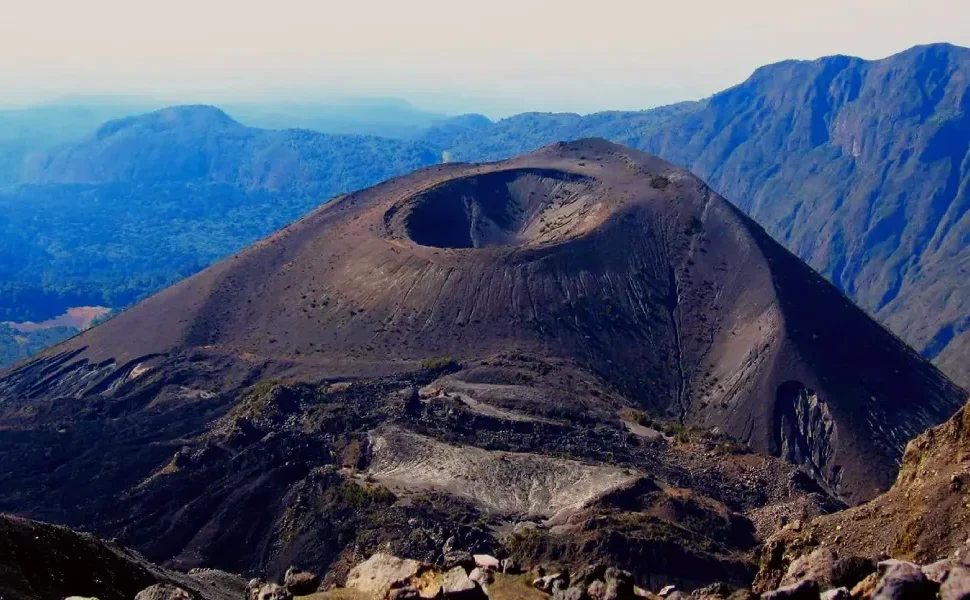
- Dramatic volcanic crater and ash cone
- Excellent acclimatization opportunity
Mount Meru Hiking Routes and Duration
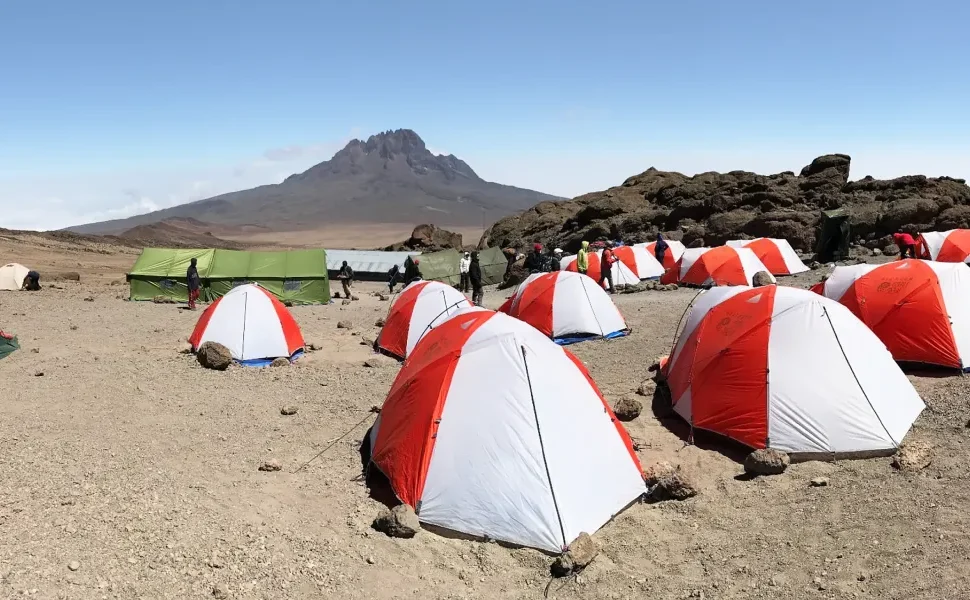
Mount Meru is typically climbed via the Momella Route, which is the only established trail. The hike usually takes 3 to 4 days, depending on your pace and acclimatization needs.
Typical Itinerary Overview
- Day 1: Momella Gate to Miriakamba Hut
- Day 2: Miriakamba Hut to Saddle Hut
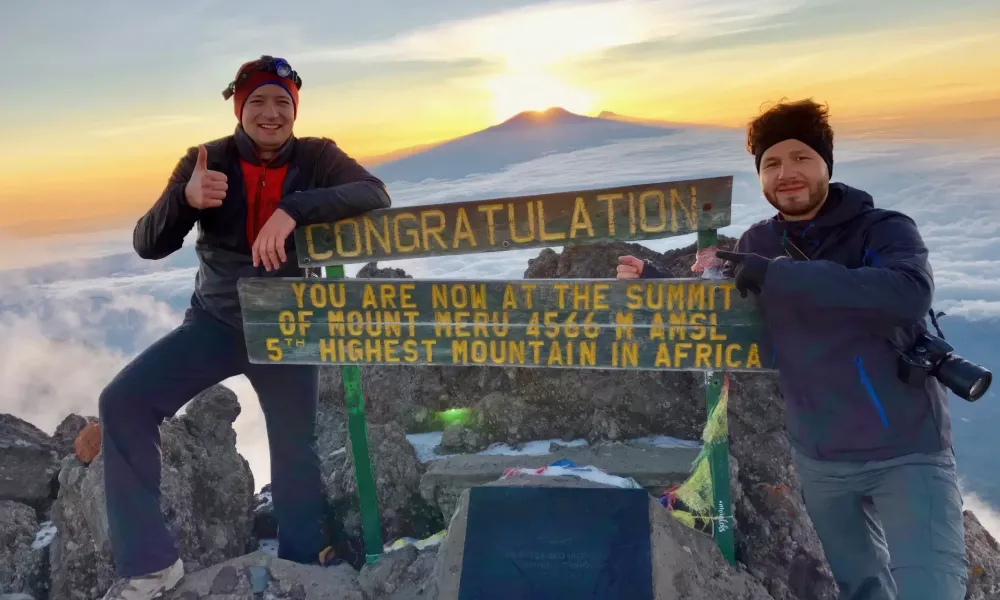
- Day 3: Summit attempt to Socialist Peak (4,566m) and descent
- Day 4 (optional): Extra acclimatization or relaxed descent
Summit day begins early, rewarding hikers with breathtaking sunrise views over Kilimanjaro and the Great Rift Valley.
Best Time to Hike Mount Meru
Mount Meru can be hiked year-round, but the best conditions are during the dry seasons:
- June to October
- January to February
During these months, trails are drier, visibility is better, and summit success rates are higher. The rainy seasons (March–May and November) offer lush scenery but can be more challenging.
Difficulty Level and Fitness Requirements
Mount Meru is considered a moderately challenging trek. While it is less demanding than Kilimanjaro, the summit day is steep and physically demanding. Good fitness, mental preparation, and proper acclimatization are essential for success.
The climb includes rocky ridges, steep ascents, and narrow paths near the crater rim, making it ideal for hikers seeking adventure.
Packing Essentials for Mount Meru Hiking
Proper gear ensures comfort and safety. Essentials include:
- Warm layered clothing
- Waterproof jacket
- Sturdy hiking boots
- Trekking poles
- Headlamp for summit night
- Daypack and duffel bag
- Sunscreen and sunglasses
All hikes require an armed ranger, porters, and a professional mountain guide.
Why Book Your Mount Meru Hike With Tanzania Hiking?
Tanzania Hiking specializes in safe, well-organized Mount Meru treks led by experienced local guides. We prioritize safety, fair porter treatment, quality equipment, and personalized service.
- Email: info@tanzaniahiking.com
- WhatsApp: +255 752 213 715 / +255 754 557 877
Our team helps you choose the right itinerary, prepare properly, and enjoy a memorable hiking experience.
Request a Quote for Your Mount Meru Hike
Ready to start your Mount Meru adventure?
Simply fill out the quote request form below, and our team will get back to you with a customized hiking package based on your travel dates, group size, and preferences.